Open like a master.
The first ten moves set up the whole game. Learn the rules that win the opening, a few solid openings for White, and the defences you can play as Black.
- Improving
- Lesson 3 of 8
- 6 videos · 8 boards
Ten opening rules
Lots of beginners’ games are lost by not sticking to these ten rules. Strong players know the exceptions, but start here.
- Put your pawns in the centre, opening with either the d-pawn or the e-pawn.
- Wherever possible, make a developing move that threatens something.
- Play the obvious before the optional. You will often know where a knight should go, while the bishop has more good squares to choose from.
- Pick the best square for a piece and develop it there once and for all. Aim for your pieces to work together.
- Don’t move one piece twice before moving the others once.
- Only one or two pawn moves in the opening. Without quick development you lose the initiative.
- Don’t bring your queen out too early.
- Castle early-ish, preferably on the kingside. It makes your king safe and brings your rooks into the game.
- Fight for the centre and always try to keep at least one pawn there.
- Never sacrifice without a clear and good reason.
Ruy Lopez
Named after a Spanish priest from the 1500s, the Ruy Lopez (or Spanish) is a strong answer to 1…e5. It gives White better chances of an advantage than many other lines.
Main line: the first eleven moves
After 3…a6 (the Morphy Defence), here are the main paths the game can take.
Exchange variation
Open variation
Riga variation
Closed variation
Modern line
Giuoco Piano (Italian Game)
The key to a good position out of the opening is controlling the centre, and many games start with 1.e4. The Italian Game aims straight at the f7 pawn and can be dangerous for Black to defend.
Giuoco Piano
London System (1.d4)
Against 1.e4, Black has lots of replies that can cause you trouble if you don’t know them. With the London System you set up the same way almost every game, without worrying too much about what Black does.
A typical London set-up
It isn’t a sharp opening, but it’s good against most of Black’s replies.
A solid build: it’s hard for Black to get play in the centre.
Your minor pieces are well developed, so you can choose.
More for White
 Play video: Ponziani Opening
Openings for Black
Black has lots of ways to answer 1.e4. Here are the main ones, so you recognise them when you meet them.
King’s Pawn
Sicilian
French
Caro-Kann
Scandinavian
Pirc
Modern
Alekhine
Nimzowitsch
Owen’s
 Play video: The Sicilian Defence
 Play video: Sicilian Defence: Closed variation
 Play video: The Czech Pirc
 Play video: The Rousseau Gambit
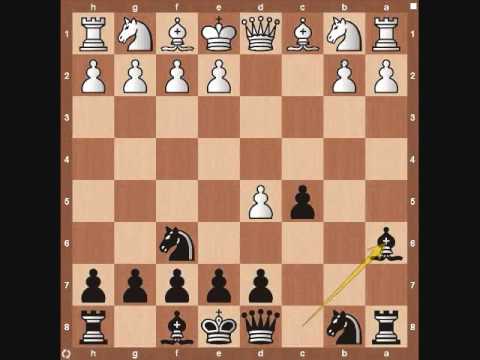 Play video: The Benko Gambit
How to think
Ask yourself these questions before every move, not just in the opening.
- What’s my best move? Should I attack or defend?
- What is my opponent thinking? What does their last move threaten?
- Do I have any tactics or ideas? Who has unprotected pieces?
- Where are my strengths, weaknesses, opportunities and threats?
Remember COT
Try it over the board on Saturday.
Our coaches go through these ideas in every session. Bring your questions, and your notation sheet.